Prospector

Prospector

An indie video game about chill resource management, crafting, and base building I made as a solo developer.

An indie video game about chill resource management, crafting, and base building I made as a solo developer.

Design & Build

Video Game / Entertainment

5 years

Design & Build

Video Game / Entertainment

5 years

Overview

Overview

Overview

Prospector is a game I designed and programmed by hand as a single developer. I've always wanted to make a video game because they are a fascinating marriage of art and technology. This was a bucket list project for me and I'm proud to say I've crossed it off my list!

Prospector is a game I designed and programmed by hand as a single developer. I've always wanted to make a video game because they are a fascinating marriage of art and technology. This was a bucket list project for me and I'm proud to say I've crossed it off my list!

Prospector's experience is about crafting items and building an outpost in space. There were a lot of complicated design challenges related to information display and contextual action. I've included a couple case studies here for my map design and item storage design that I think stand apart in their complexity and the elegance of my final design.

Prospector's experience is about crafting items and building an outpost in space. There were a lot of complicated design challenges related to information display and contextual action. I've included a couple case studies here for my map design and item storage design that I think stand apart in their complexity and the elegance of my final design.

Map Design

Map Design

Map Design

Designing a map experience for game exploration

Designing a map experience for game exploration

How can I provide a map experience for a semi-open world game where exploration feels like meaningful progression?

Prospector’s core exploration mechanic involves searching for additional resources via strategic placement of supply lines to provide the player with oxygen for survival and power for extended base building. I used a traditional fog of war to obfuscate the world map, but decided to only reveal areas the player has charted with a supply line. This allowed me to hide resource placement while adding to the player's fantasy that they are actually mapping an uncharted world.

  1. Place supply lines for oxygen and power distribution.

  1. Supply lines clear fog of war and reveal resource locations.

  1. Get an overview of active work areas and current production.

Design challenge

Showing the right amount of information without being overwhelming.

Design challenge

Showing the right amount of information without being overwhelming.

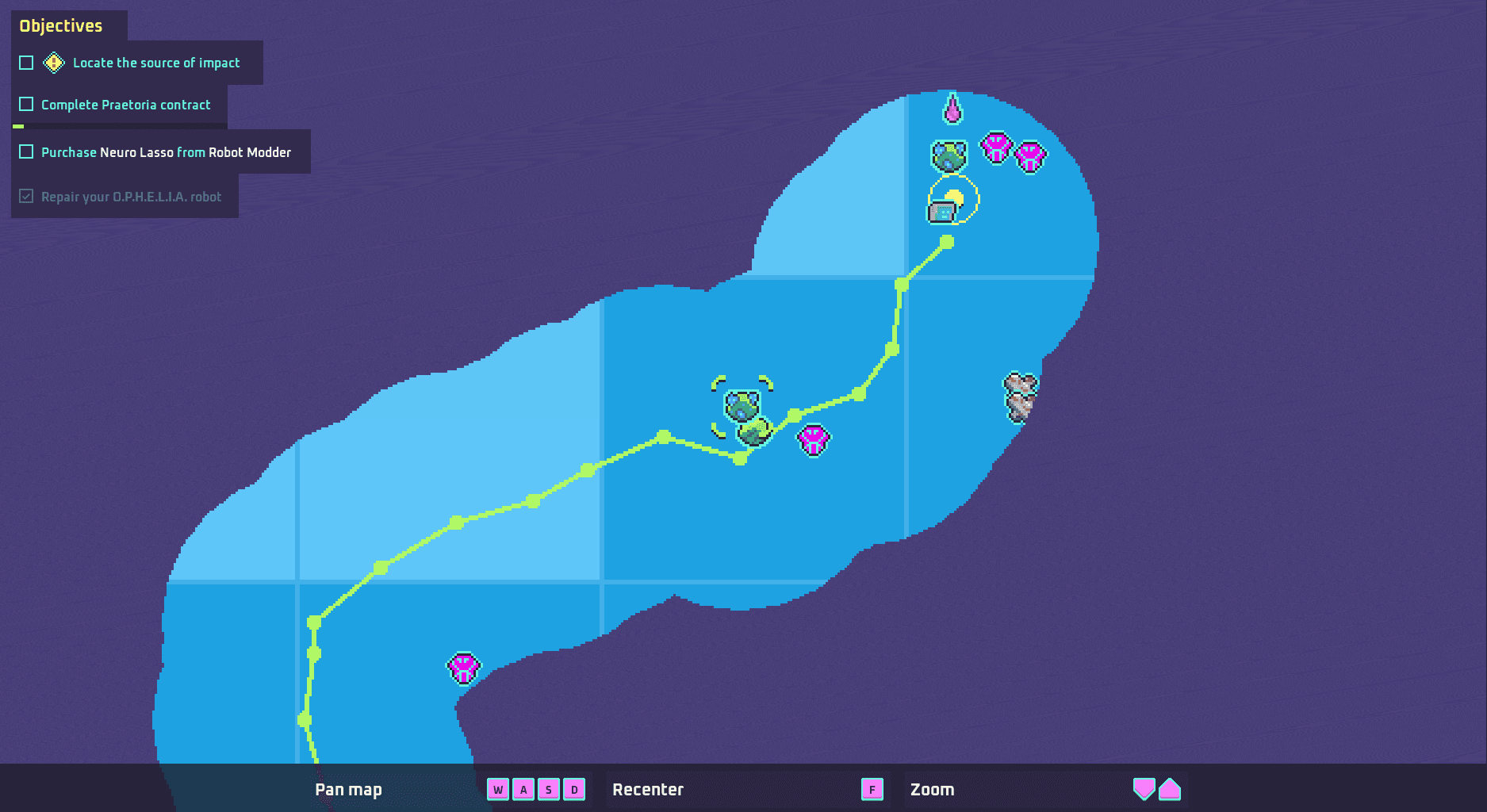
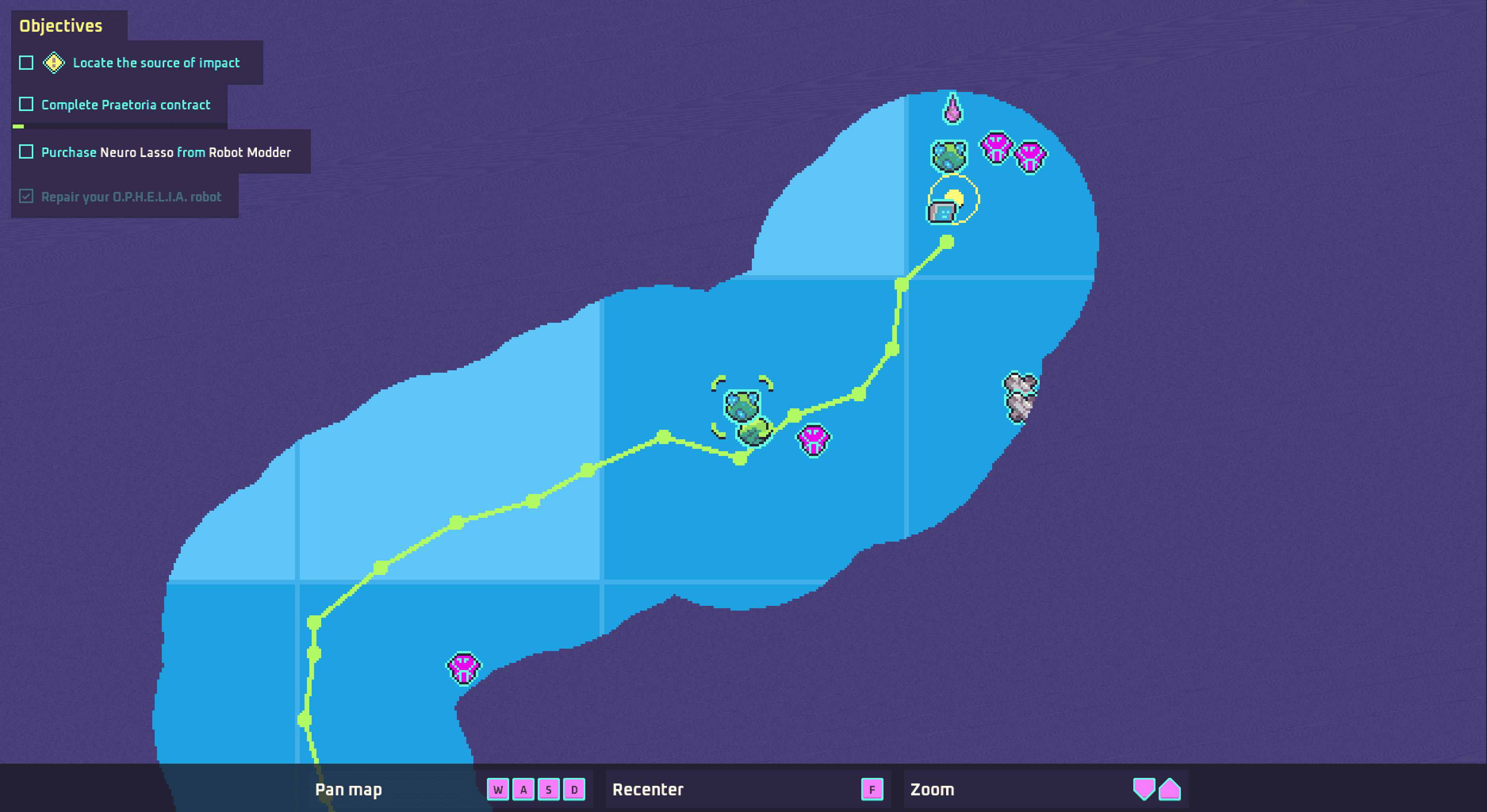
The original map design used colored blocks to denote different resource types, every building placed, and every supply line dropped. This worked well enough for the early game, but completely broke down in mid/late game where the majority of the world map was uncovered.
Solution

Only show pins for resources with static world placement so players can remember where those resources are located.

Solution

Only show pins for resources with static world placement so players can remember where those resources are located.

This change resulted in a map that showed fewer unnecessary details while simultaneously bubbling the most important information up in the map’s visual hierarchy.

Design challenge

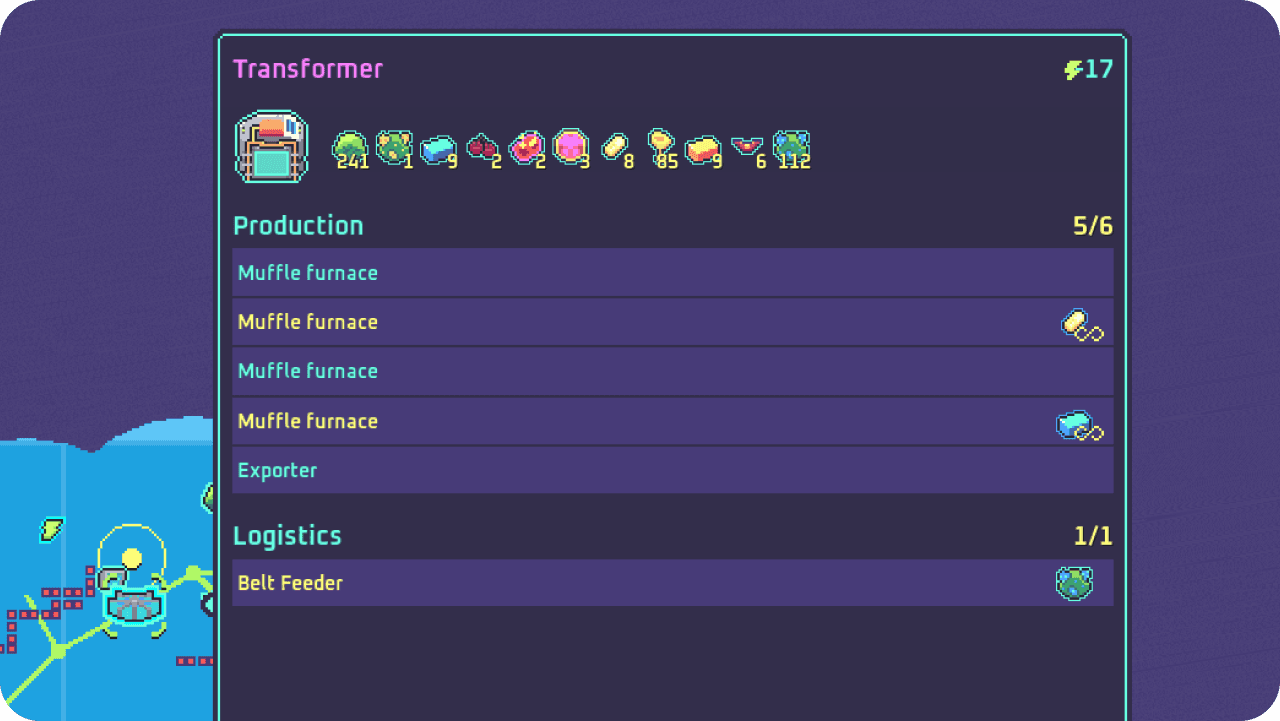
Clustered building placement results in overlapping pins that obfuscate a player’s base layout.

Design challenge

Clustered building placement results in overlapping pins that obfuscate a player’s base layout.

Similar to the previous issue of too much detail reducing valuable information, buildings placed close together made it hard for players to identify specific locations due to overlapping pins.
Solution

Only show pins for resources with static world placement so players can remember where those resources are located.

Solution

Combine building pins for production and logistics types into a single transformer pin, then use progressive disclosure to reveal what buildings exist in a transformer block and what they are doing.

I explored a few options on how to solve this problem:

I explored a few options on how to solve this problem:

  1. Cluster pins based on zoom level, similar to how applications like Yelp represent multiple pins in a single location with a number, then break them into individual pins as you zoom in.

  1. Show generic colored blocks for most buildings like furnaces while showing special pins for unique buildings like the Changing Station or Fabricator.

  1. Show pins for any building outside a Transformer zone while clustering buildings inside a Transformer zone and allow the player to expand a list of buildings by hovering on the Transformer building.

I decided to implement design option #3 because it was an effective way to solve overlapping pins while providing a high level of detail to players and it was significantly cheaper to build than clustering pins dynamically based on zoom level.

Inventory management

Inventory management

Inventory management

Smart storage filters that reduce friction but not the fun

How can I improving quality of life while adding min/max features for power players?

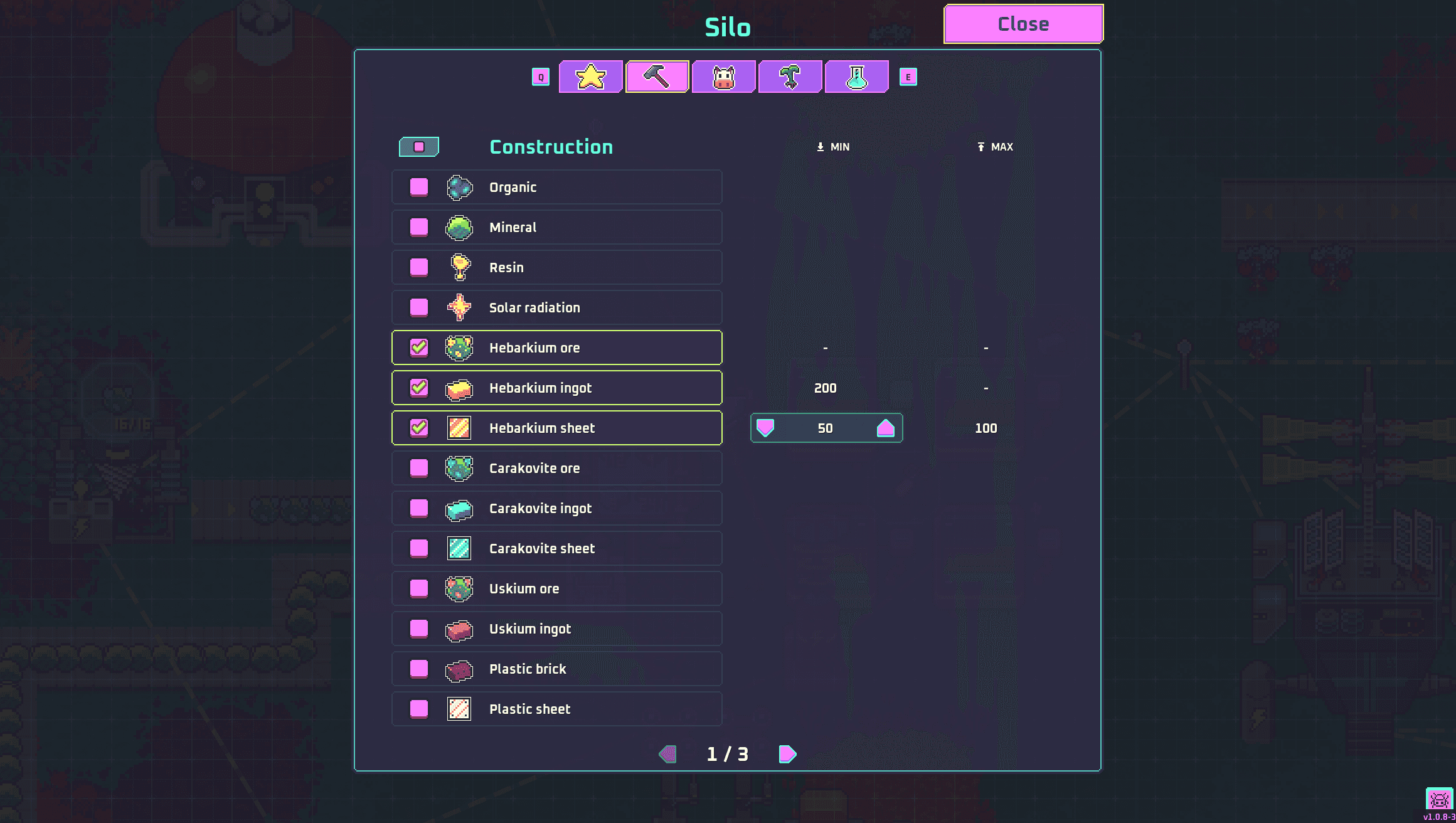
While Prospector is not a hardcore logistics game, resource management is a critical component for its design. The game’s experience necessitates players crafting thousands of items and storing them in logical containers. Prospector has an item storage building called a Silo, which supports 36 item slots.

  1. Open the filters menu for a specific silo
  1. Set filters and limits organized by category

  1. Modify from favorites tab for quick updates

Design challenge

Supporting automated item collection while still affording players the ability to organize their resources.

Design challenge

Supporting automated item collection while still affording players the ability to organize their resources.

In the original design, collector bots were snapped onto silos and would collect any item in the same workspace as their parent silo. This worked OK if players only had a single silo inside a Transformer work area, but the experience became a bit of a nightmare after scaling to 2-3 different silos with their own bots collecting and storing items using a first-come, first-served basis.

In the original design, collector bots were snapped onto silos and would collect any item in the same workspace as their parent silo. This worked OK if players only had a single silo inside a Transformer work area, but the experience became a bit of a nightmare after scaling to 2-3 different silos with their own bots collecting and storing items using a first-come, first-served basis.

Solution

Default silos to accept any item, but allow players to filter to specific items for better organization.

Solution

Default silos to accept any item, but allow players to filter to specific items for better organization.

You can also see that item filters themselves are added to larger categories that map to specific use cases players might have for a particular work area. For example, this allows players to quickly decide that a silo is only for storing animal products and makes it easy to toggle all those items at once, which saves them from having to activate 20+ toggles.

Design challenge

Basic and refined crafting items still have value in the late game, but production automation is constantly converting them into other items.

Design challenge

Basic and refined crafting items still have value in the late game, but production automation is constantly converting them into other items.

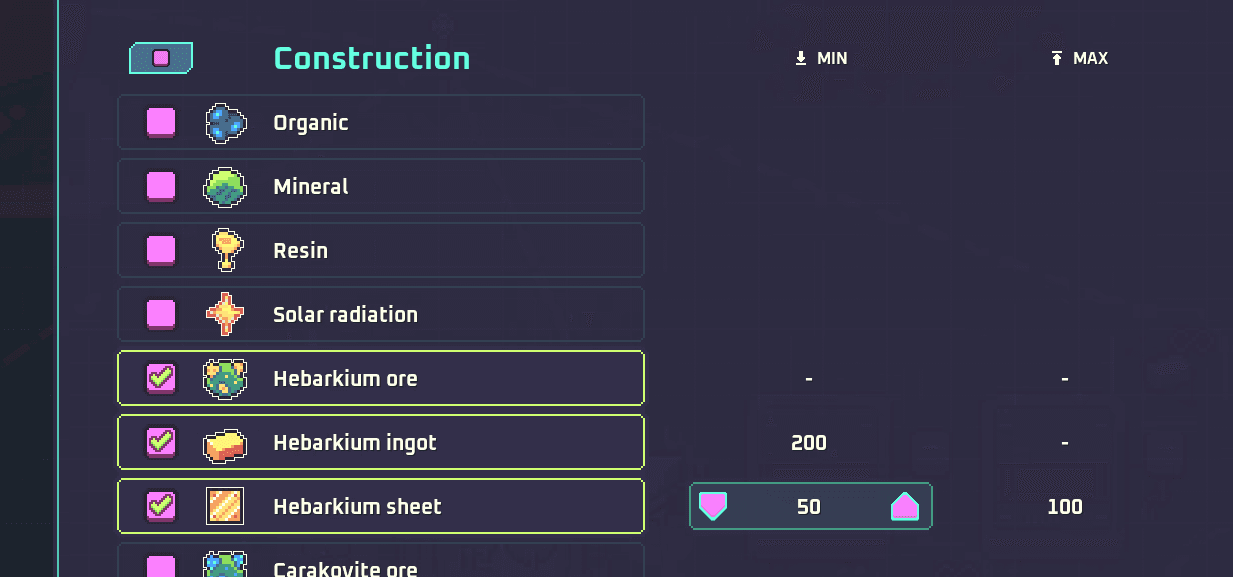
For example, let’s say the player has a furnace and a sheet press inside the same work zone. If the furnace is set to make infinite plastic bricks while the sheet press is set to make infinite plastic sheets, every single plastic brick will be turned into a sheet when players actually want a certain amount of both.
Solution

Add min/max item limits for silo items so players can maintain a healthy stock of important resources.

Solution

Add min/max item limits for silo items so players can maintain a healthy stock of important resources.

With this update, players could control how many of a resource could be used in automated crafting by setting a minimum limit. In addition, setting a max would prevent a single silo from filling up with a single item.


Impact

Impact

Impact

Getting the opportunity to work on this project was all the impact I was really looking for. That being said, the outcome exceeded my wildest expectations. I am truly proud of what I was able to accomplish as a single developer!

Getting the opportunity to work on this project was all the impact I was really looking for. That being said, the outcome exceeded my wildest expectations. I am truly proud of what I was able to accomplish as a single developer!

Gross revenue

$80k+

Player reviews

Positive

Gross revenue

$80k+

Player reviews

Positive

Gross revenue

$80k+

Player reviews

Positive